
When the last fire of the season dies down and temperatures start to climb here in North Atlanta, it’s easy to close the glass doors on your fireplace and forget about it until October. Out of sight, out of mind, right?
But if you live in Marietta, Roswell, Woodstock, or anywhere else in our corner of Georgia, your chimney has just been through a lot. Between the cooler months of heavy use and our dramatic spring thunderstorm season, the weeks following winter are actually one of the most critical times to show your chimney some attention. A little spring chimney maintenance now can save you from major headaches, and expensive repair bills, later.
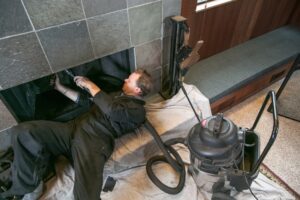
The Winter Toll on Your Chimney
Think about everything your chimney endured from November through February. It handled constant temperature swings, smoke, and creosote buildup. Then, just as it was starting to rest, those wild North Georgia spring storms rolled in.
Our specific climate here in Cherokee, Cobb, and Fulton counties creates a perfect storm for chimney damage. We experience what’s called a freeze-thaw cycle. When water seeps into small cracks in your brick or mortar (often caused by winter wear), and the temperature drops overnight, that water freezes and expands. This turns tiny fissures into big, structural problems practically overnight.
Your Post-Winter Chimney Checklist
Before the humidity of a Georgia summer sets in, here are three things we recommend every homeowner do:
1. Schedule a Professional Cleaning
Even if you only burned a few fires this past winter, creosote builds up. It’s a highly flammable, tar-like substance that sticks to the inside of your flue. Removing it now eliminates the risk of it sitting there all summer and ensures you’re not starting next fire season with a hazard already in place.
2. Inspect for Visible Damage
Grab a pair of binoculars and take a look at your chimney from the ground (safely). Do you see any missing mortar, spalling bricks (where the surface is flaking off), or a leaning chimney structure? These are signs that water has already started to do its dirty work.
3. Check Your Chimney Cap
This is your chimney’s primary defense. Is it still securely attached? Is it rusted or damaged? A good chimney cap keeps out rain, and just as importantly, keeps out animals. As the weather warms up, raccoons, squirrels, and birds start looking for cozy places to nest. An uncapped chimney is a five-star hotel for them. Once they move in, removing them is a challenge you don’t want to deal with.
Why Spring Matters for Water Leaks
Water is masonry’s worst enemy. The #1 service call we get after a heavy rain is for chimney leaks. Homeowners often assume the roof is the problem, but nine times out of ten, it’s a compromised chimney.
When the mortar joints (the “glue” between the bricks) deteriorate, water pours in. It can run down into your fireplace, stain your ceiling, and rot the wood framing around your chimney. Catching this in the spring, before the summer rains really set in, is key to maintaining the value of your home.
Let a Professional Take a Look
At Advanced Chimney Sweeps, we always tell our customers: “We’d rather do a small repair in April than a massive rebuild in December.” A certified technician can spot the early warning signs that you might miss, like hairline cracks in the crown or slight deterioration in the flashing where the chimney meets the roof.
Serving North Atlanta since 1989, we understand exactly how our local weather impacts your home. We offer a “No Mess Guarantee” and can provide free estimates to put your mind at ease. Don’t let your chimney sleep through spring without a proper wake-up call. A little attention now means your fireplace will be safe, sound, and ready to go when the leaves start to turn again.
Ready to schedule your spring inspection? Give our team a call at 770.884.6475 or schedule an appointment online.